Taking our leadership in the security industry seriously, we continually strive for excellence, to develop cutting-edge products to keep people safe and secure in their homes and places of work.
Manufacturing many of our key products locally is a competitive edge for Allegion New Zealand, an integral part of our innovation and business that allows us to increase efficiency and timely product delivery, while staying close to our customers.
To consistently design and develop safety and security solutions, our local product development and product management teams work closely together to proactively elicit customer feedback, conduct market research, and seek inspiration from current trends.
Local product development and product management teams work closely to gather customer feedback, conduct market research, and monitor current trends when designing safety and security solutions.
Customers can often describe the problems they face but not the optimal solutions; design thinking is used to bridge that gap between customer needs and technical options. One example is Allegion New Zealand’s QuickFix™ technology, developed to simplify door hardware installation and reduce labour costs for end users.
Prioritising ideas across the business requires an innovation process that balances three objectives: better solutions, lower risk and cost of change, and stakeholder buy-in. Typical steps include developing a business case to define opportunities, committing to a selected concept, creating and testing prototypes, and scheduling production once an innovation is approved.
For manufacturing roles, organisations generally look for a positive attitude, a willingness to learn, and a commitment to quality.
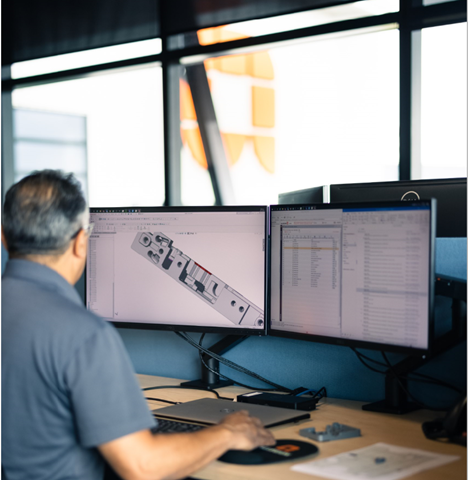
Allegion New Zealand's local manufacturing starts with product design and development.
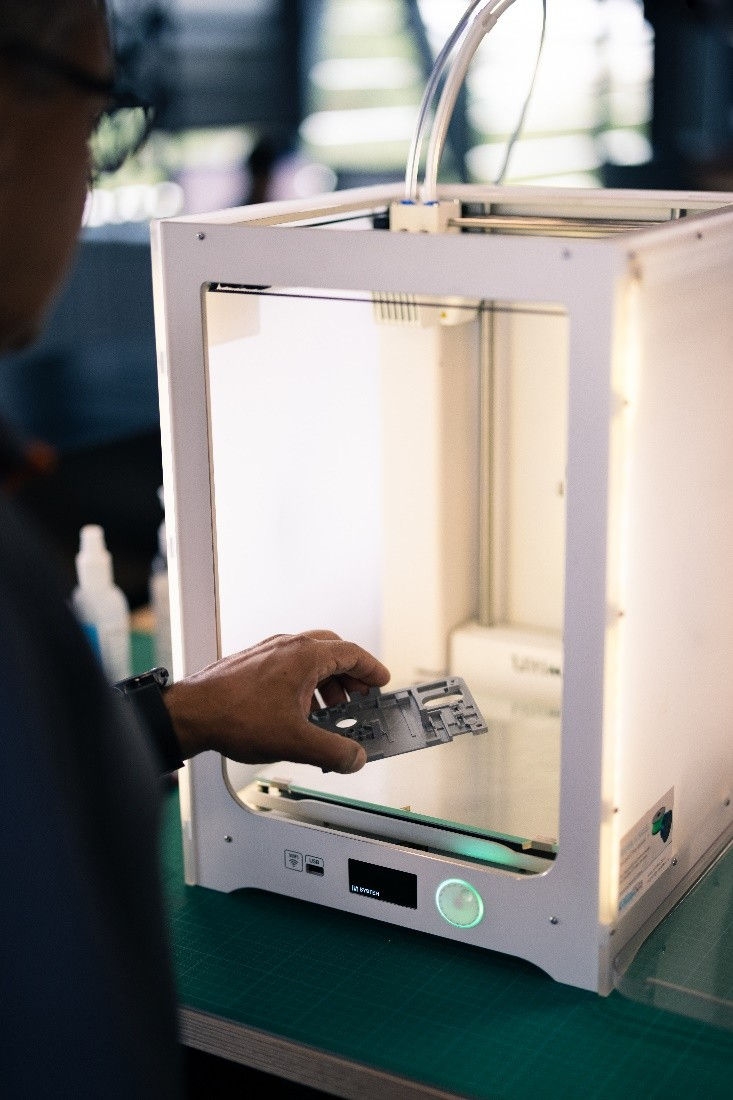
Our 3D printer is very useful for product prototyping.
Testing begins during design validation, before prototypes are produced. Computer-aided engineering tools are used to simulate physical loads and identify potential weak points; the results are fed back into the design to guide revisions and prototype development.
The objective of these tests is to confirm that the product meets expected physical performance requirements and to provide confidence to customers. After design validation and successful prototype testing, projects typically proceed to hard tooling and volume production.
Quality control continues throughout manufacturing, with ongoing checks such as spring performance, strength and durability testing, and inspections of surface finish and appearance to maintain product standards.
Quality Technician Gary Kelly says, “Wherever we can, we look to test above and beyond the requirements defined in market standards. This gives us and our customers extra peace of mind. Take for example our trusted Legge 990 Series mortice lock – we know that this lock will regularly test to in excess of 1 million door opening and closing cycles, double the requirement of the highest certification level in the Australian and New Zealand standards."
Manufacturing security hardware involves several steps. For example, production of Legge narrow stile plate furniture typically begins with raw drawn bar loaded into a CNC mill for precision machining. The plates are then hand-polished or satin-finished to remove imperfections before electroplating, which improves corrosion resistance and provides the required surface finish. Electroplating is performed under controls to meet environmental and quality standards.
After passing quality control, plates move to final assembly, where finished goods are inspected again before being packaged for delivery or added to inventory. Packaging choices for locally produced items have been reviewed to improve sustainability, including efforts to reduce the use of non-recyclable hard clamshell plastics.
Our Brio Wardrobe and Open Bar rails are trimmed to size on-site from 6-metre stainless steel bars, which are then polished, finished in matt black or satin stainless steel, and lastly assembled in a pack-set. Manufacturing Engineer Johann Hogan stresses the need for precision, that the accuracy of fixturing in the machine is of utmost importance. All machines follow scheduled maintenance and servicing to maximise performance and efficiencies. “In manufacturing, you can always do better - better tools, better materials, better machines, better manufacturing processes.” He adds that Allegion regularly invests in new machinery and technology, in addition to exploring methods to improve processes. Health and safety of staff is crucial, so the operations team continuously looks for ways to increase safety in running the machines and in every step of the assembly and distribution process.
When it comes to manufacturing, employees require a good attitude, the willingness to learn, and a passion for excellence. As far as skills and talents are concerned, Allegion New Zealand has been very fortunate. “We have a stable base of employees who know their job very well, a strong employer brand, and an effective internal referral programme to attract new talent as the business expands,” says Human Resources Manager Odette Jury.
Flexing of our manufacturing staff has proven to be an effective system. Rotating people to work in the different parts of the factory gives everyone the opportunity to learn other skills and ensure that all manufacturing areas are covered during periods of leave or uneven production demand. She adds that the average length of service of employees across our manufacturing and distribution teams in New Zealand exceeds ten years. Our staff retention and loyalty are high because Allegion looks after its employees.
“We like to make a positive impact on the work and personal lives of our people,” states Jury. We provide toolbox training sessions on safe operating procedures, have a health and wellness programme, and give regular recognition awards and health and safety spot prizes. These, as well as a high focus on safety, are inherent to our culture and our core values.
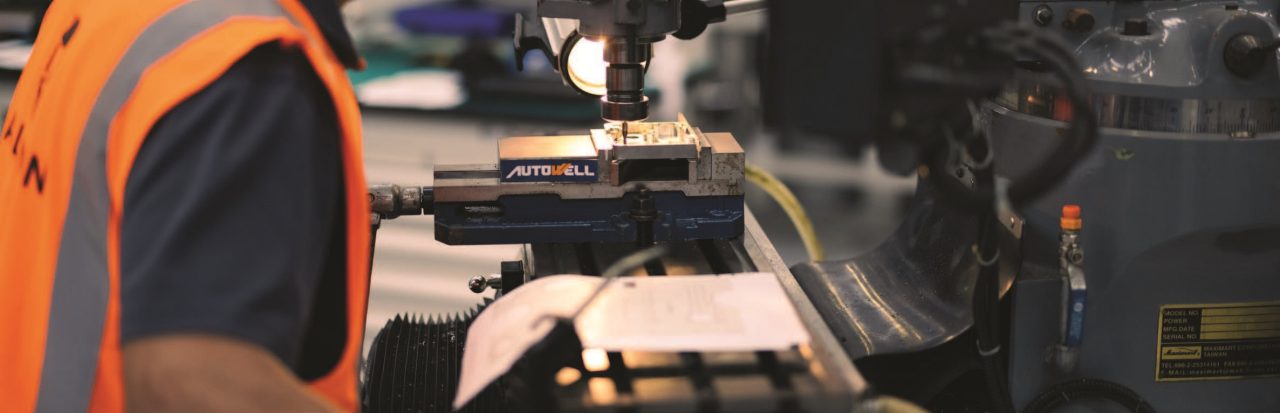
Prototyping using a milling machine for testing of a mortice lock case.
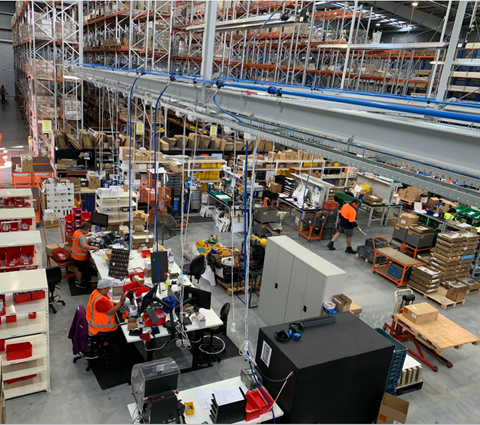
Our manufacturing and assembly staff follow safe operating procedures.
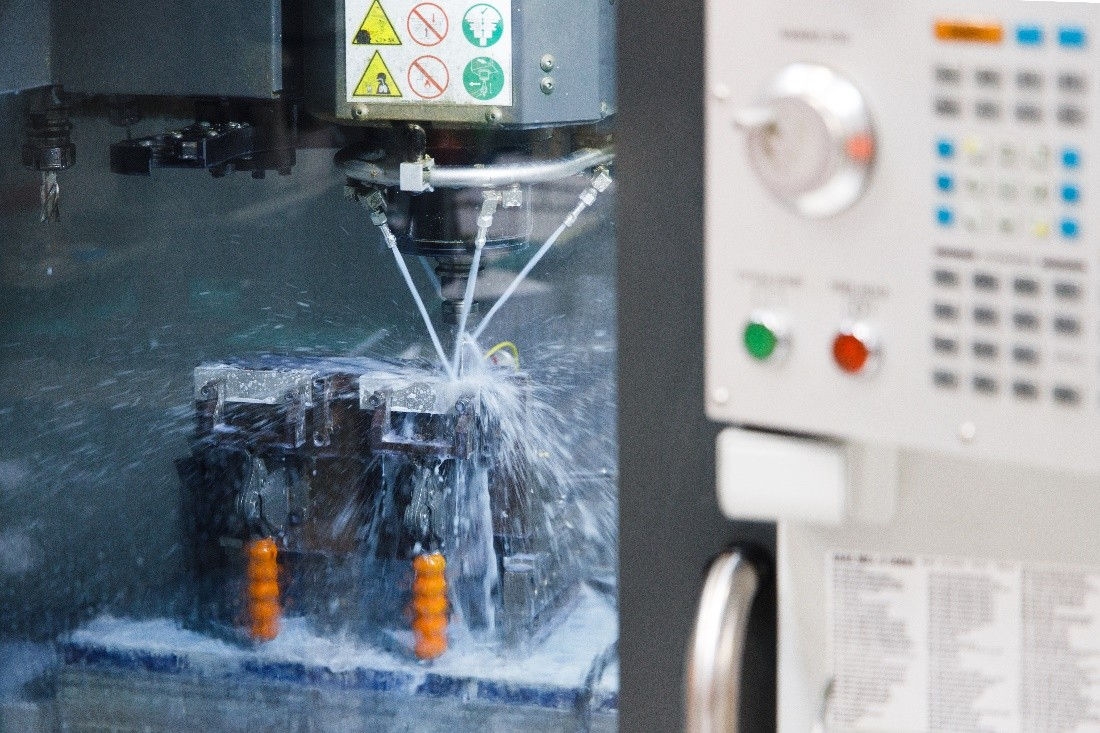
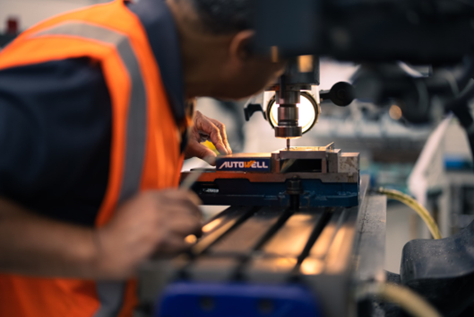
Manufacturing of a mortice lock case using the CNC machine.
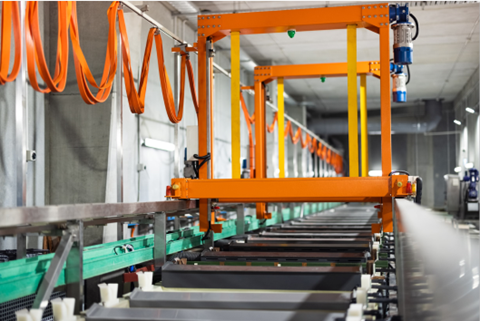
Door hardware is considered the jewellery of a home that can create an impact at the entrance and set the tone of a room. Special finishing of door hardware improves corrosion resistance, strength, durability, and extends decorative options to meet an architectural vision to impart cohesiveness to a space.
To further set us apart in the market, Allegion New Zealand offers an extensive selection of special finishes produced in-house to complement architectural designs with our state-of-the-art electroplating plant. This helps ensure a faster turnaround, quality control, environmental respect, and the ability to accommodate special requests.
Automated finishing equipment reduces operator exposure to chemicals and improves process precision, consistency and repeatability. The company also monitors environmental performance of finishing operations; wastewater treatment is managed to ensure appropriate pH, temperature, and low concentrations of metals and solids.
The combination of finishing options and process controls is intended to deliver products that meet both functional requirements and aesthetic specifications. Management emphasises continuous improvement in these areas.
With 30+ brands sold in over 120 countries across the globe, we specialise in doorway and access security.